


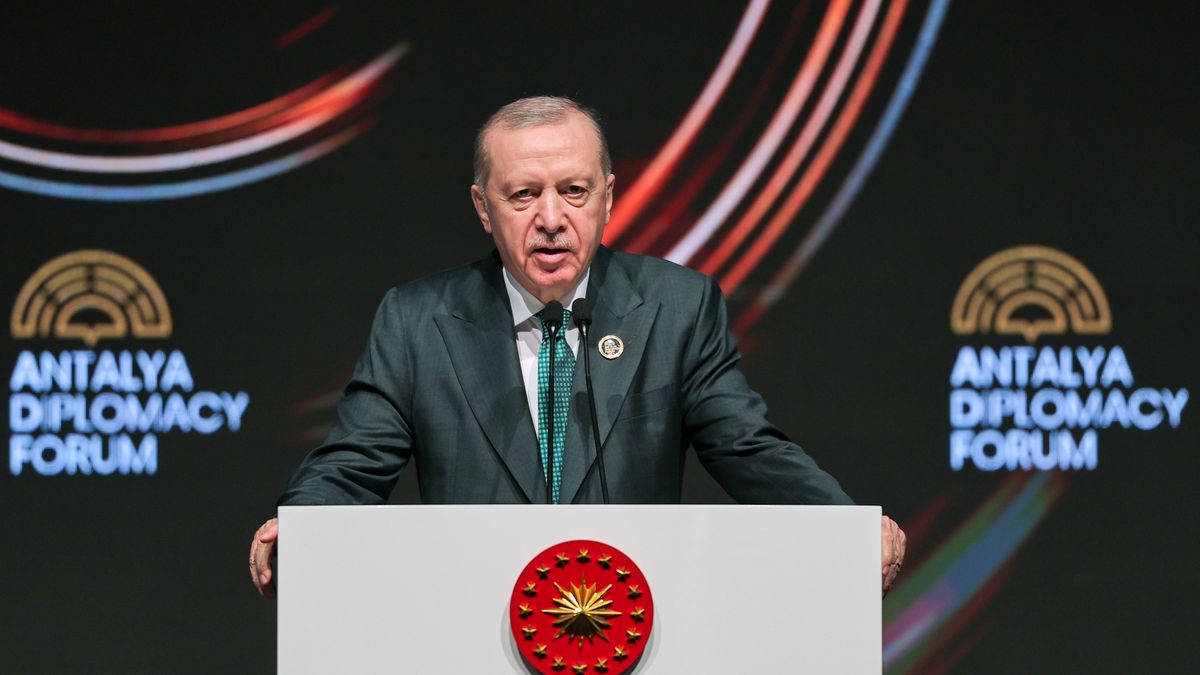
The recent Antalya Diplomacy Forum, set against the serene backdrop of a golf resort and beach club, once again brought together global leaders and diplomats to discuss pressing international issues. Amidst the usual calls for cooperation and understanding, Turkish President Recep Tayyip Erdoğan delivered a strikingly candid statement that resonated through the halls. Often portrayed as a key player in regional dynamics, Erdoğan’s presence at the forum, sometimes metaphorically described as that of a ‘peace dove,’ underscores Turkey’s active role in international mediation and dialogue. However, his remarks at this year’s gathering pointed to a deeper skepticism regarding the efficacy of existing global frameworks and institutions.
President Erdoğan posed a fundamental question to the assembled delegates: “How can one trust a system that doesn’t solve the problems?” This potent query cuts to the heart of contemporary international relations, challenging the very foundations of multilateralism and global governance. His statement suggests a growing frustration, not just within Turkey but perhaps mirroring sentiments in many parts of the world, that established mechanisms and power structures are increasingly failing to address urgent crises, from geopolitical conflicts and economic disparities to climate change and humanitarian emergencies. Such a critique from a head of state at a high-profile diplomatic event demands serious consideration, prompting an examination of accountability and effectiveness within global political architectures.
Erdoğan’s question isn’t merely rhetorical; it invites a profound introspection into the credibility and legitimacy of international bodies and agreements. In an era marked by complex, interconnected challenges, the perceived inability of global systems to deliver tangible solutions erodes public and governmental trust alike. This sentiment can lead to a rise in unilateral actions, regional blocs, and a general fragmentation of the international order, further complicating efforts to forge consensus and collective action. The context of the Antalya Diplomacy Forum, designed precisely to foster dialogue and problem-solving, makes Erdoğan’s critique particularly poignant, as it directly challenges the output of such gatherings if they do not translate into effective resolutions.
The implications of President Erdoğan’s statement extend beyond the forum itself, signaling a potential shift in diplomatic discourse towards a more results-oriented assessment of international collaboration. His remarks highlight a critical need for systems to not only convene discussions but to demonstrably resolve the issues they aim to tackle. For global leaders and policymakers, the challenge is clear: rebuild trust by demonstrating the capacity and willingness of international systems to effectively address the world’s most pressing problems. The Antalya Diplomacy Forum, therefore, served as a platform not just for diplomacy, but for a stark, necessary self-reflection on the state and future of global problem-solving.

